Ask five different data trackers what a home in Pace is selling for this summer and you will get five different numbers, all technically correct, all measuring something slightly different. But underneath the noise sits a fact that should reorder how anyone shopping this market thinks about price: the entry point for a brand-new home in Pace right now sits below what a used one is actually closing for. That is backwards from how new construction usually works, and it did not happen because builders got generous. It happened because they got strategic about which number they are willing to move.
The Gap Between What Sellers Ask and What They Get
Start with resale, because that is the number most buyers see first. Over the three months ending in June 2026, homes in Pace closed at a median price of $324,000, down 4.5% from the same period a year earlier, at roughly $178 a square foot. Homes were taking an average of 58 days to sell, faster than the 72 days they took a year prior.
Pull a different tracker's July 2026 snapshot and the list-side numbers read higher: a median list price near $349,900, with homes sitting for an average of 78.5 days and roughly 1.63 months of supply on the ground. A third source puts July's median even higher, at $359,900, with homes averaging 75 days on market. Each of these providers draws the Pace boundary a little differently and measures list versus closed price differently, which is why the headline figures do not match exactly. What they agree on is the shape of the gap: sellers are asking for one number and buyers are paying something closer to another, and that spread has been widening.
The clearest sign of that shift shows up in a stat most sellers would rather not advertise. A year ago, roughly 17.24% of Pace homes sold above their asking price. This year that figure fell to 7.58%. Meanwhile, the share of listings that took a price cut barely moved, holding just under 40%. Sellers are still listing optimistically. They are just not getting away with it as often.
Five Builders, One Price Band, Five Different Deals
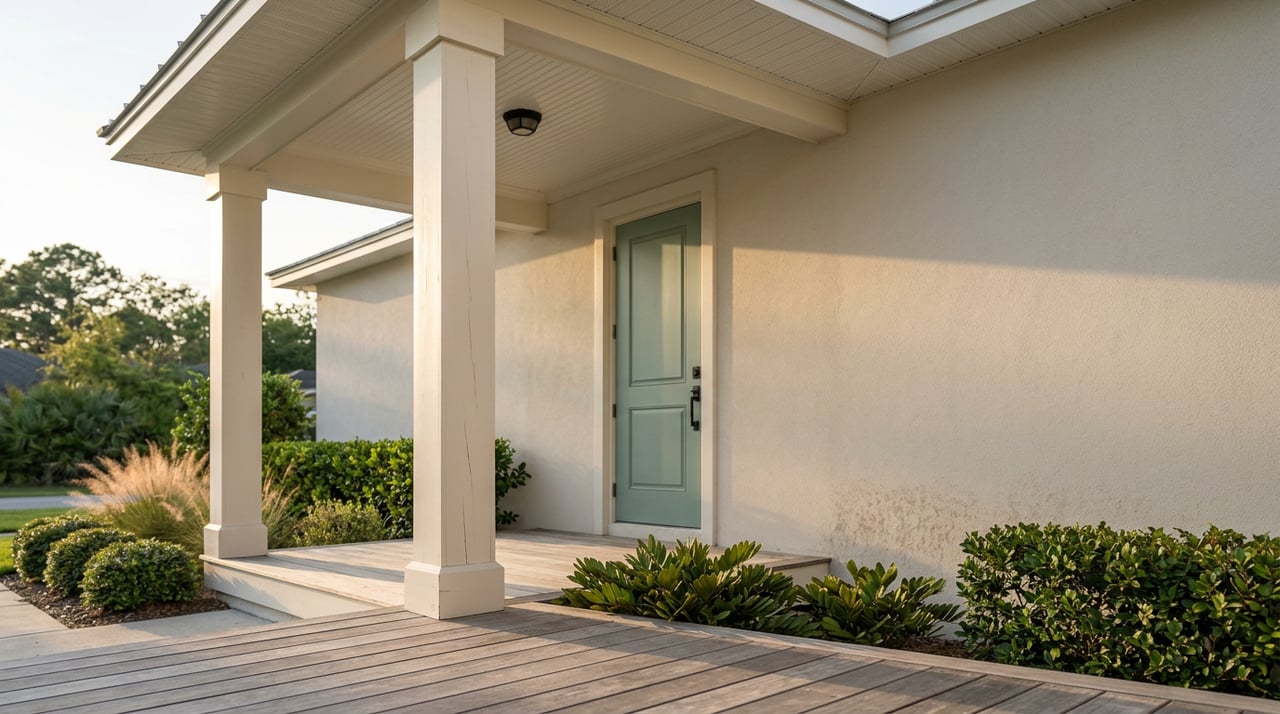
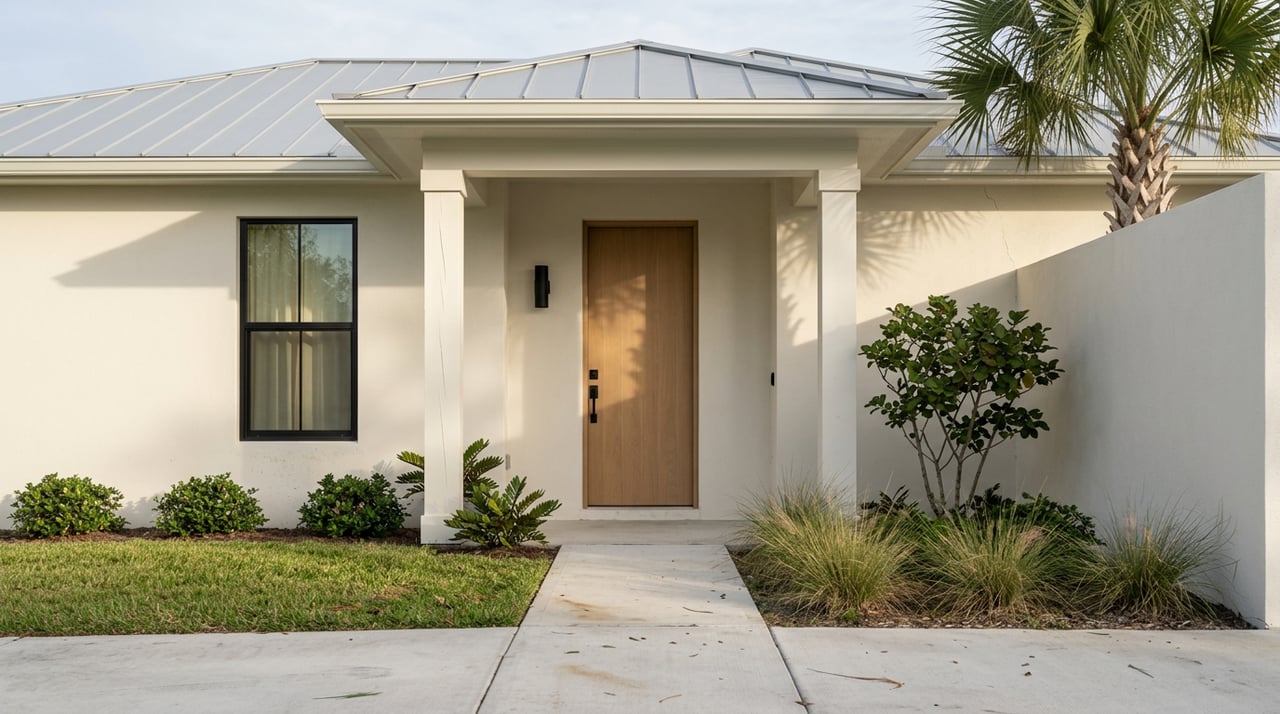
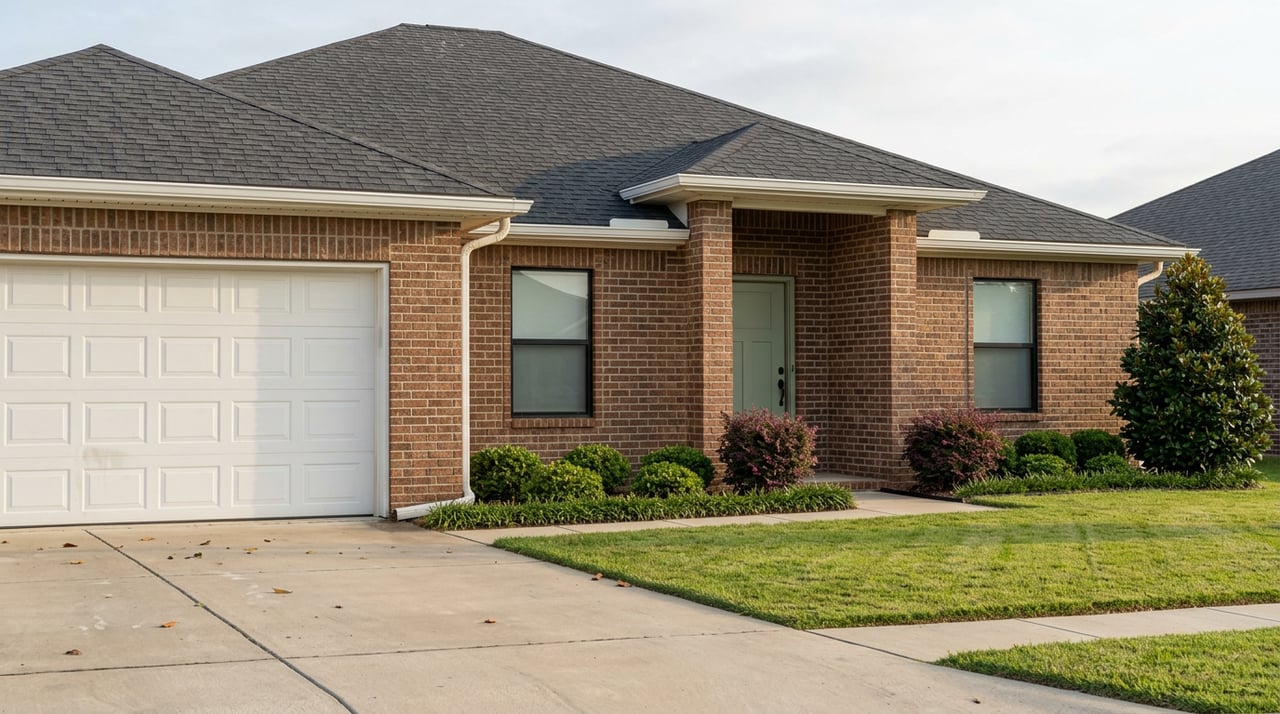
Now look at what is happening on the new-construction side, where the story gets more interesting because the builders are not hiding in the shadows. They are all active, all visible, and all clustered in almost the same price band, which makes the differences between them easier to see than they usually are.
Adams Homes is building Parkland Place off Berryhill Road, a community with a pool, splash pad, playground, dog park and pickleball courts, with floor plans running 1,425 to 3,105 square feet and pricing that has run from $328,300 to $438,900. A short drive away, the same builder has Sandy Creek moving through its "coming soon" phase off Quintette Road, pitched around country-style acreage rather than an amenity center.
Holiday Builders, alongside some DSLD Homes inventory, is building Southern Palms off West Spencer Road. Floor plans there run smaller, 1,685 to 2,145 square feet, and pricing has run from $291,990 to $338,990 with a $17 a month HOA fee on at least one collection and no confirmed Community Development District assessment on that phase.
D.R. Horton has Parker Grove, a townhome community built around a shared pool near the center of town, and Chase Farms, pitched as rural charm with modern convenience. DSLD Homes entered the market citing proximity to Floridatown Park and the UWF bike trails as part of the draw, which tells you builders are now marketing lifestyle access points, not just square footage.
| Community | Builder | Price range | Notable detail |
|---|---|---|---|
| Parkland Place | Adams Homes | $328,300 to $438,900 | Pool, splash pad, pickleball, dog park, off Berryhill Road |
| Sandy Creek | Adams Homes | Not yet priced | Acreage-style lots off Quintette Road, coming soon |
| Southern Palms | Holiday Builders / DSLD Homes | $291,990 to $338,990 | $17/month HOA on one collection, no CDD confirmed |
Line those numbers up against the resale figures above and something stands out. Southern Palms' floor, just under $292,000, sits below every version of the resale median cited earlier, whether you use the $324,000 closed figure or the higher list-price readings. A buyer who wants a brand-new home with a builder warranty can currently get in cheaper than someone buying an older home that already sold.
Why Builders Won't Just Cut the Price
The instinct is to assume Southern Palms is simply the cheap option and Parkland Place is the nice one. That is not quite what is happening. The real driver is something builders rarely say out loud in their marketing: the recorded sale price on a home becomes the appraisal comp for every other home in that same subdivision phase. Drop the sticker price on one lot to move it, and you have just told the appraiser what the whole block is worth going forward.
So builders protect the base price and negotiate everywhere else instead. Rate buydowns. Design center credits. Closing cost assistance. Flex cash that shows up as a line item rather than a lower number on the sign out front. One Pace listing currently on the market is advertising up to $20,000 in incentives toward closing costs or a rate buydown on a single-story home, without touching the base price at all.
That is the mechanism behind the whole board above. Two buyers can walk into two different Pace communities with nearly identical floor plans and identical published prices and end up paying meaningfully different amounts, because one negotiated the incentive stack and the other took the sticker price at face value.
What This Means If You're Cross-Shopping Neighborhoods
For a buyer comparing Pace against other parts of the Emerald Coast, the underlying affordability case still holds. As of August 2026, the typical Pace home runs about 3.7 times the local median income, roughly 26% cheaper than the Florida norm, with a gross rent yield near 7.14%. At today's rates, carrying the typical home eats up about 22.5% of median income in principal and interest. Those are the numbers that keep national builders showing up here even as appreciation flattens. They are also the numbers that make Pace worth a serious look for a buyer weighing carrying costs against a rental unit, not just a homeowner comparing commute times.
How to Actually Compare Two Builder Communities
Given all of that, a published price in Pace should be treated as a starting point for a conversation, not a final answer. A few things worth doing before comparing two communities on paper:
- Ask each builder for the current incentive stack in writing, not just the base price on the model.
- Convert every incentive to its effect on your monthly payment, since a rate buydown and a flat closing credit are not worth the same thing to every buyer.
- Compare the resulting effective price against actual closed prices for similar-sized resale homes, not the resale list price, since the two have been diverging.
- Confirm HOA fees and CDD status for the specific phase and lot you are buying, since terms can shift between sections of the same subdivision.
None of this shows up on a builder's website. It shows up in the sales office, and only if you ask the right question in the right order.
A Couple of Direct Questions
Will new construction always be cheaper than resale in Pace? Not necessarily. What the current data shows is a temporary inversion at the entry level, where one builder's base price has slipped below the resale median. Middle and upper price bands in new construction still run above resale, and that could shift again as incentives change or resale prices adjust further.
Why not just wait for builders to drop prices instead of offering incentives? Because the incentive is often the better deal for a buyer anyway. A rate buydown or a design credit can be worth more to your monthly payment than an equivalent price cut, and unlike a price cut, it does not show up in the public record as a lower comp for your own home down the road.
If you are trying to figure out which of these numbers actually applies to the home you are looking at, that is exactly the kind of conversation worth having before you write an offer. Michael Tracy has spent more than three decades working both sides of this market, from retail buyers to the builder relationships that shape it, and can walk you through what a specific incentive stack is really worth against the resale alternative down the street. Schedule a Free Consultation to get the comparison in front of you before you decide.